Can a Phone Recording Identify a Watch Movement by Sound?
About 3 min read
A phone recording is not enough to identify the movement inside a replica watch or diagnose its condition. It records sound under particular microphone, distance and background conditions. If sound matters to you, ask for an identified recording of the offered item and an explanation of how it was made. Do not turn an unfamiliar noise into a component specification.
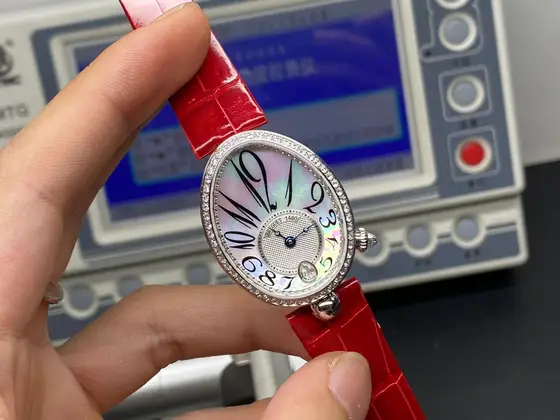
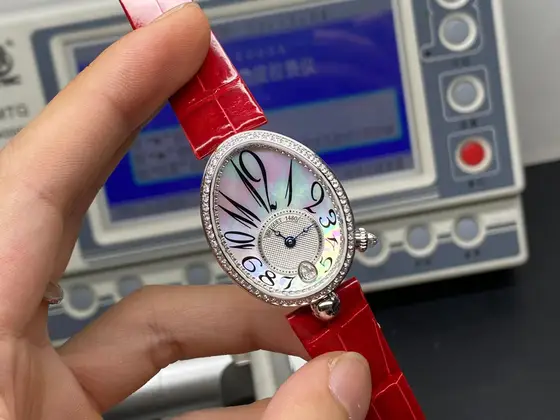
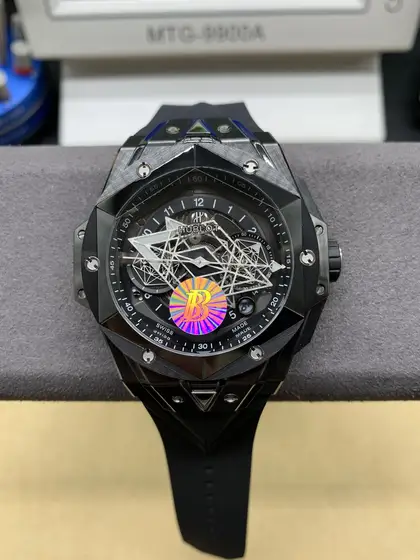
The Breguet inventory 03708 and Hublot inventory 02737 images below are unchanged store references. These are replicas, not genuine or manufacturer-authorised watches. This article includes no sound recording, internal inspection or noise test of either product.
A photograph has no audio evidence
Item 03708 has an oval face with elongated dark numerals, changing pale colours, a bright decorative border and a red strap. Its appearance gives no evidence of a ticking pattern, rotor sound or movement construction. Equipment visible in the background is not an identified measurement report.
The 02737 image shows a dark angular case, a white web-like pattern across the dial and a black strap. A patterned or open-looking design does not identify which internal parts can be heard. Visible dial detail cannot supply an audio demonstration that has not been recorded.
Ask about the recording setup
For a useful enquiry, ask that the actual item remain visible and that its inventory number be identified. Clarify how far the phone is from the watch, whether the room is quiet and whether the phone is resting on the same surface. A clip made with a microphone close to the case is not a demonstration of what you will hear at an ordinary wearing distance.
Ask whether the watch was stationary or being moved. Do not request vigorous shaking, tapping the case or forcing a control to make a sound. A noise created by handling, a table or nearby equipment should not silently become a claim about the mechanism.
Do not rank loudness from unrelated clips
- Different phones and microphone positions are not a common measuring setup.
- Changing room noise can hide a sound that is present.
- Editing or automatic audio processing can change the apparent result.
- A silent or loud-sounding clip does not establish accuracy, durability or movement origin.
No decibel threshold or normal ticking rate is proposed here. If a recording is distorted or too quiet to interpret, keep that uncertainty in your notes rather than calling the watch quiet, damaged or superior. A recording can support a question without settling the cause.
Can a familiar sound prove that two watches share a movement?
No such conclusion is established by a phone clip. Component identification requires information about the actual item, not a resemblance to an online recording. Ask the seller what is confirmed and leave any unsupported movement name out of the comparison.
For the separate visual-operation question, see why a still photo cannot show hand movement. For interpreting visible internal-looking detail, read what an open-looking dial does not establish. Sound is another type of evidence to describe carefully, not a shortcut to a technical specification.
Questions about these watches?
Ask us on WhatsApp for current photos, sizing and delivery details. Include the watch you are interested in so we can help.
WhatsApp: +63 965 401 5278