Faceted Watch Cases: What Two Angles Reveal
About 2 min read
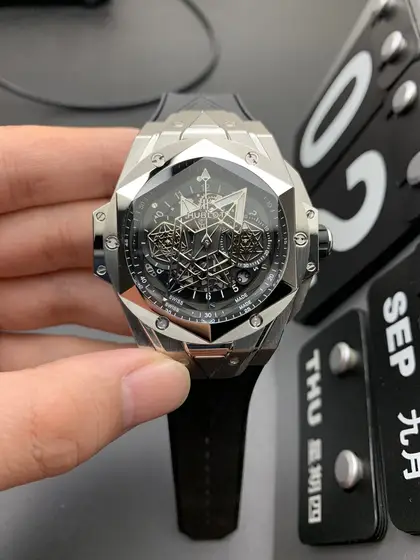
A faceted case changes its visual outline as the viewing angle changes. Bright surfaces can make the corners appear stronger in one photograph and quieter in another. When shopping for a replica with an expressive shape, compare those views before assuming the first image represents the way it will look from every position.
What the original photographs show
The cover shows an angular, silver-coloured case around a dark, detailed face and a dark strap. The second photograph presents the same watch at a different angle, revealing more of the side surfaces. These visible facets describe its appearance; they do not establish the case material or manufacturing process. The linked item is a replica, not a genuine Hublot watch or a product authorised by that brand.
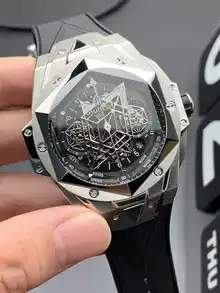
Follow the edges rather than the reflections
Look at where the case changes direction and how its corners relate to the strap. Those edges help you understand the shape even when a reflected light patch changes between pictures. Avoid describing brightness as proof of a particular metal or finish. If measurements matter, ask for them directly instead of estimating size from the hand holding the watch or the props behind it.
Compare the outline with your sleeve
A plain cuff may make the angular shape more noticeable, while a textured sleeve can produce a busier overall impression. Think about your own wardrobe and the places you would wear the watch. View the complete item at normal size before zooming into the dial details. This helps form a visual preference but cannot demonstrate comfort, case thickness or clearance beneath a particular shirt cuff.
Request the views you are missing
If both photographs emphasise the face, ask for a clearer side view and the actual dimensions. If the intricate dial is part of the appeal, request the function information you need instead of inferring it from visible parts. Keep all answers tied to this inventory reference. A familiar brand style or a complex-looking surface should not take the place of item-specific evidence when you compare replicas.
Two angles make an expressive case easier to understand. Use them to judge its shape, then confirm the practical details that a photograph cannot measure.